In today’s digital world, online platforms are filled with user-generated content—from social media posts to e-commerce reviews and forum discussions.
While this creates an engaging and dynamic environment, it also presents risks such as misinformation, cyberbullying, and offensive material.
This is where content moderation policies come into play. These guidelines help maintain a safe, respectful, and compliant online space for users.
But what exactly are these policies, and why are they so important? We’re going to explain it in simple terms.
What is Content Moderation?
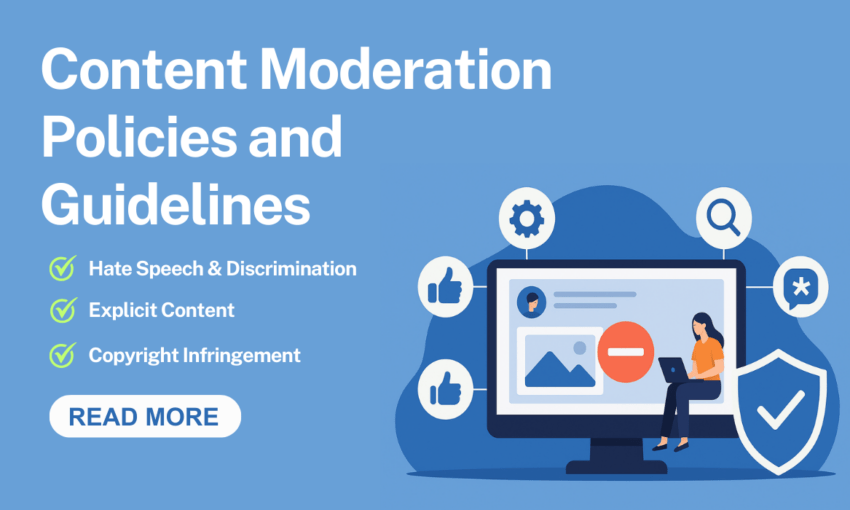
Content moderation policies are the rules and guidelines set by online platforms to review, monitor, and manage user-generated content.
UCG or User generated content moderation team defines what is acceptable and what should be removed. They make sure that harmful or inappropriate content does not spread.
Why It Is Essential for Online Communities
Without UGC content moderation, online platforms can quickly become toxic environments filled with hate speech, scams, and explicit content. Strong policies help:
- It helps build trust among users
- It acts as a protector of the brand’s reputation.
- It ensures platforms follow legal and regulatory compliance.
Key Areas Covered Under Content Moderation
Content moderation policies focuses on the following aspects:
- Hate speech and discrimination
- Misinformation and fake news
- Cyberbullying and harassment
- Explicit and adult content
- Violence and threats
- Copyright infringement
Why Are Content Moderation Policies Important?
1. Ensuring User Safety and Trust
Users are more likely to engage with an online platform when they feel safe. Following content moderation guidelines ensure that harmful content is flagged and removed, creating a positive user experience.
2. Preventing Harmful and Illegal Content
Harmful content can damage individuals, spread misinformation, or even incite violence. Effective moderation policies help prevent such risks by filtering out dangerous material.
3. Compliance with Legal and Regulatory Requirements
Different countries have laws regarding online content, such as:
- GDPR (General Data Protection Regulation) in Europe.
- COPPA (Children’s Online Privacy Protection Act) in the U.S.
Adhering to these policies helps businesses stay compliant and avoid legal troubles.
Types of Content Moderation
Different platforms use various moderation techniques based on their needs. Here are the common types:
1. Pre-Moderation
Pre-moderation is a content moderation strategy in which content is reviewed before being posted on a platform. It enables users to approve it before it goes live.
Although slow and insufficient for high-speed internet scenarios, still it is used to secure platforms.
2. Post-Moderation
Post-moderation is a prominent content screening strategy that allows users to post material without waiting for moderation.
It cuts the review time to delete flagged content and is therefore desired by digital enterprises. Social media platforms like X, and Instagram often use this approach.
3. Automated Moderation
AI tools and machine learning algorithms detect and remove content based on predefined guidelines. Ai in content moderation is useful for high-volume platforms.
4. Community Moderation
Users report inappropriate content, and moderators take action based on community feedback. It is mostly used for forum communities like Reddit and Wikipedia, as they implement forum moderator guidelines to review content.
5. Distributed Moderation
Distributed Moderation allows online communities to review and remove content using a rating system to ensure compliance. However, this approach is rarely used due to reputation and legal concerns.
6. Hybrid Moderation
Hybrid Moderation uses AI in content moderation to detect suspicious content and human moderators to review complex cases. This is the most effective approach for large-scale platforms.
Key Guidelines in Content Moderation Policies
1. Hate Speech and Discrimination
Platforms must prohibit content that promotes:
- Racism
- Sexism
- Age
- Disability
- Religion
2. Violence and Threats
Giving threats, and igniting violence, must be strictly moderated. Violence and threats can be:
- Sexual Violence
- Emotional Violence
- Psychological Violence
- Verbal Abuse
3. Misinformation and Fake News
If moderators find any false information and fake news it must be eliminated. Misinformation and fake news can be:
- Health
- Politics
- Public safety
- Manipulate content
The above information should be fact-checked and controlled.
4. Explicit and Adult Content
Policies should restrict the sharing of adult content, ensuring compliance with age-appropriate regulations.
5. Cyberbullying and Harassment
Online harassment and bullying should be actively monitored and penalized to protect users.
6. Copyright Infringement
Platforms must remove unauthorized use of copyrighted content to prevent legal disputes.
How Are Content Moderation Policies Enforced?
1. AI-Based Moderation
AI scans images, videos, and text to detect and remove harmful content in real time.
2. Human Moderation Teams
Trained human moderators review flagged content and handle complex cases where AI may fail.
3. User Reporting and Flagging Systems
Users can report content that violates policies, helping moderators to take action.
Do’s and Don’ts of Content Moderation
Do’s of Content Moderation
- Set clear content guidelines for users.
- Use AI and human moderation for better accuracy
- Stay updated with local and international regulations.
- If you are using social media, follow social media moderation guidelines.
Don’ts of Content Moderation
- Do not over-rely on AI without human supervision.
- Avoid unspecific policies that lead to inconsistent enforcement.
- Do not ignore user feedback and reports, take it seriously.
- Be quick while taking responses to flagged content. If delayed, it can harm users and the brand’s reputation.
Best Practices for Effective Content Moderation
To effectively enforce these guidelines, consider the below content moderation best practices.
1. Establishing Clear Guidelines
Platforms should clearly define what content is allowed and what to ban. It will avoid confusion among users.
2. Using a Combination of AI and Human Moderation
A hybrid approach ensures efficiency while maintaining accuracy in complex moderation cases.
3. Providing Appeals and Transparency in Decisions
Both users and platform moderators should have transparency in their communication. Users should be able to appeal content removals. Likewise, platforms should understand their appeal and take action.
FAQs
Q1. What Are the Consequences of Not Having Content Moderation?
Without outsourcing content moderation, platforms can become unsafe. It may increase hate speech, misinformation, and harmful content on online platforms.
Q2. How Do Platforms Decide What Content to Remove?
Platforms implement community norms that ban hate speech, harassment, criminal behavior, as well as other harmful or offensive content.
Q3. What Is Content Moderation in Detail?
Content moderation is the systematic review and monitoring of user-generated content on online platforms. It ensures it follows content moderation guidelines, and promotes a safe and positive user experience.
Q4. What Are Examples of Content Moderation?
Examples of content moderation include human reviewing of posts for hate speech or false information, automatic filtering of spam, and offensive language.
Conclusion
Content moderation policies are essential for maintaining safe, trustworthy, and compliant online communities. They protect users from harmful content while ensuring a positive digital experience.
By implementing strong content moderation guidelines, businesses can foster a safer online environment, build user trust, and stay compliant with regulations.
Lastly, if you want to ensure your platform is moderated effectively?
Start developing clear policies and leveraging AI-powered and human-led moderation today!
Also read: Best Content Moderation Tools to use in 2025